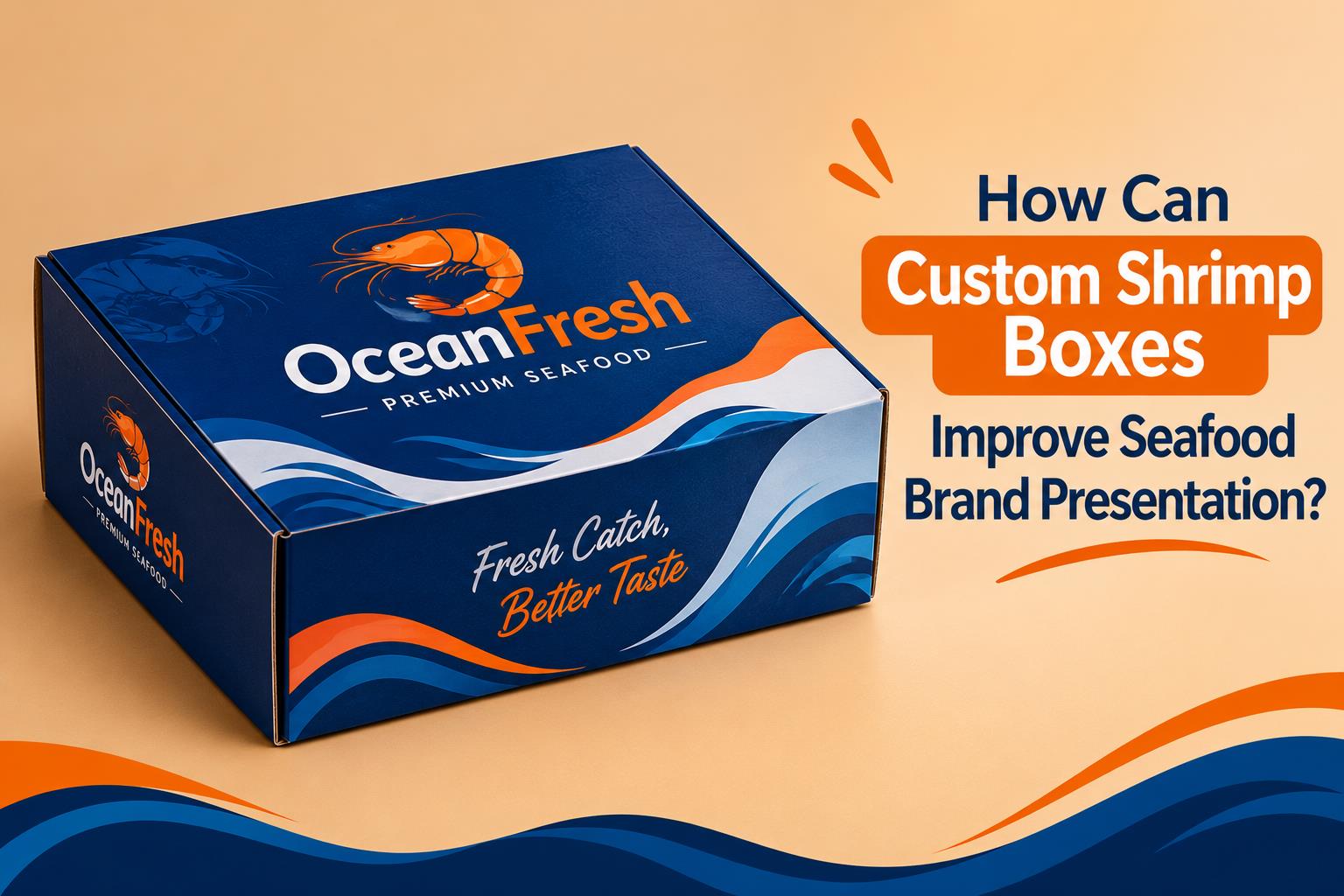
In the seafood industry, packaging is more than a way to carry products. It helps customers recognize a brand, judge product quality, and decide whether they want to buy again. For shrimp businesses, well-designed packaging can make a product look fresh, clean, and professional.
Custom shrimp boxes help seafood brands create a consistent identity. Businesses can add their logo, brand colors, product details, and attractive graphics to make their packaging easy to recognize. Whether shrimp are sold in supermarkets, seafood markets, restaurants, or through online orders, professional packaging helps create a better presentation.
A clear and attractive design also helps a brand stand out from competing seafood products.
1. Build a Recognizable Seafood Brand
Brand recognition is important when customers have several seafood products to choose from. Plain packaging may protect the product, but it does little to help customers remember the business.
Custom printing gives seafood brands a way to show their identity on every package. A business can include:
- Company logo and brand colors
- Product name and shrimp variety
- Net weight and pack size
- Product images or simple seafood graphics
- Contact details and website
- Relevant certification or sourcing information, where verified
Using the same design across different package sizes also creates a consistent look. Customers can recognize the brand more easily, whether they purchase a small retail pack or a larger food-service order.

2. Make Freshness and Quality More Visible
Freshness is one of the most important factors in seafood purchasing decisions. Packaging should help customers understand what they are buying and how the product should be handled.
The 2026 ASC Consumer Survey found that freshness was the leading spontaneous purchase consideration for seafood consumers, mentioned by 31% of respondents. Price followed at 27%.
This finding highlights why seafood brands should make product information easy to see. Packaging can display shrimp size, product type, storage instructions, and relevant handling information.
For frozen shrimp, clear frozen-storage instructions are useful. For chilled products, packaging should communicate the correct refrigeration requirements.
However, attractive packaging cannot replace proper temperature control, food-safe materials, or hygienic handling.
3. Improve Product Protection During Storage and Delivery
Shrimp products need custom packaging that suits their storage conditions and transportation requirements. Moisture, leakage, temperature changes, and rough handling can affect product quality and the customer's experience.
The right box structure and material can help protect shrimp during storage and distribution.
Depending on the product and supply chain, businesses can consider:
- Moisture-resistant materials
- Leak-resistant inner liners
- Strong corrugated outer boxes
- Insulated packaging for temperature-sensitive shipments
- Secure closures for better handling
- Suitable food-contact materials
Frozen shrimp shipped over long distances may require insulated packaging and appropriate refrigerants. Retail shrimp packs may need a different design.
The packaging should always be selected according to the product, storage temperature, transport time, and food-safety requirements.
4. Use Attractive Designs to Improve Shelf Appeal
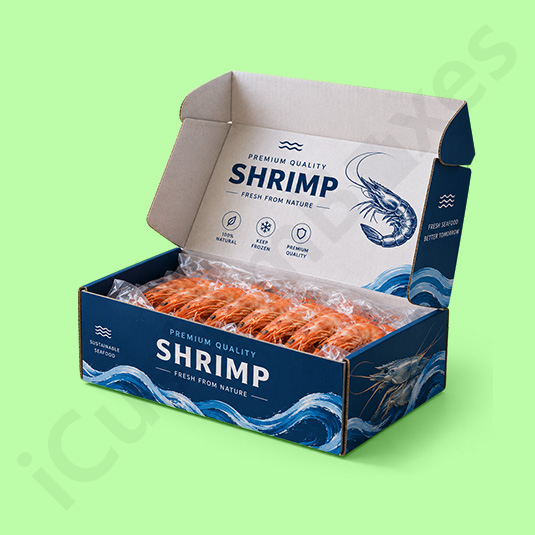
Customers often notice packaging before they read the product details. A clean design can make shrimp products look more professional and help them attract attention.
Seafood brands can use ocean-inspired colors, simple shrimp illustrations, clear typography, and high-quality product images. The design should communicate the product without making the box look crowded.
Good packaging design should include:
- A visible brand logo
- Easy-to-read product names
- Clear product images
- Balanced colors and typography
- Organized product information
A professional design also helps restaurants and seafood retailers present their products consistently across different sales channels.
5. Choose Packaging That Supports Sustainability
Sustainable packaging is becoming more relevant to food businesses. Customers increasingly notice materials, recyclability, and unnecessary packaging.
According to Shorr's 2026 Sustainable Packaging Consumer Report, 62% of surveyed US consumers had consciously purchased products with sustainable packaging in the previous six months. The report also found that 93% were more likely to purchase from brands offering sustainable packaging.
Seafood businesses can consider recyclable outer cartons, responsibly sourced paperboard, reduced packaging waste, and appropriately designed materials.
However, sustainability should not come at the expense of food protection. Packaging must still provide the moisture resistance, strength, and temperature protection required for shrimp products.
Brands should also avoid unsupported claims such as "100% eco-friendly" or "fully recyclable" unless the complete packaging meets those requirements.
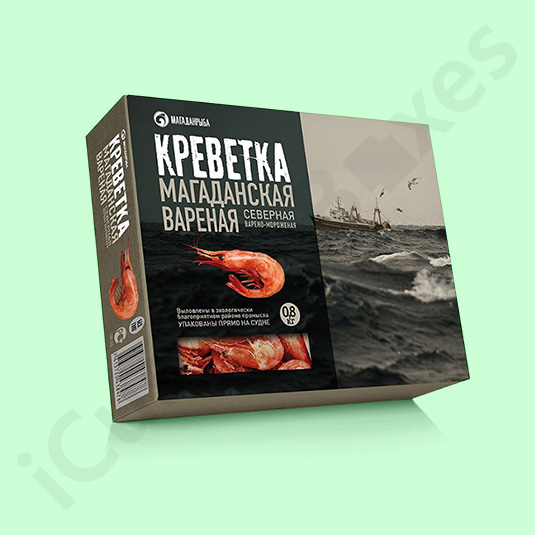
Packaging is also an important communication tool. Customers should not have to search for basic product details.
A well-organized shrimp box can display:
- Shrimp variety and product description
- Net weight
- Ingredients and allergen information
- Storage and handling instructions
- Cooking instructions, where relevant
- Batch or lot identification
- Required date marking
- Origin and certification details, where applicable
Clear information makes the product easier to understand and helps customers make informed purchasing decisions.
Businesses should check the food-labeling requirements of their target market before printing packaging. Requirements can differ between countries and product categories.
7. Create a Better Unboxing and Customer Experience
Packaging continues to represent a brand after the purchase. Damaged boxes, poor printing, confusing labels, or difficult openings can create a negative impression.
A strong packaging design should be easy to handle, store, transport, and open. Secure closures and suitable box sizes can also improve convenience.
For restaurants and seafood distributors, practical packaging can make bulk handling easier. For retail customers, clean presentation and readable product information can make the buying experience more convenient.
These small details help create a professional impression and encourage customers to remember the brand.
Conclusion
Packaging plays an important role in how customers see a seafood business. From brand recognition and shelf appeal to product protection and clear labeling, the right box can improve several parts of the customer experience.
Seafood businesses should choose packaging based on their shrimp products, storage conditions, transportation needs, and branding goals. Exploring suitable food packaging boxes can also help businesses maintain a consistent packaging style across their product range.
A well-designed shrimp box should do more than look attractive. It should protect the product, communicate useful information, and make the seafood brand easier to recognize.